Switchblade 600 Block 2: 2026 Tactical Report & C-UAS Countermeasures
Exclusive 2026 technical report on the Switchblade 600 Block 2. Analyze battlefield performance, Project LASSO evaluations, and advanced C-UAS countermeasures.
SWITCHBLADE 600
Aegis Warfare Team
1/7/20264 min read
Technical Report: Switchblade 600 Loitering Munition – Tactical Dominance and Counter-UAS Strategie
Subject: Technical specifications, battlefield performance, and defensive countermeasures of the AeroVironment Switchblade 600.
Executive Summary
The Switchblade 600 (SB600) has redefined the "tactical edge" in modern peer-to-peer conflict. Moving beyond the anti-personnel capabilities of the legacy Switchblade 300, the 600 series provides a man-portable, anti-armor precision strike capability that eliminates the need for traditional air support or heavy artillery. This report analyzes its technical evolution into the Block 2 variant, operational use cases in Eastern Europe and US Army LASSO (Low Altitude Stalking and Strike Ordnance) initiatives, and critical countermeasures for surviving the loitering munition threat.
I. Technical Specifications & Performance Data
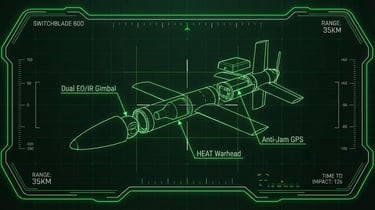
The Switchblade 600 is an all-in-one, tube-launched system designed for rapid deployment (<10 minutes) and high-lethality impacts.
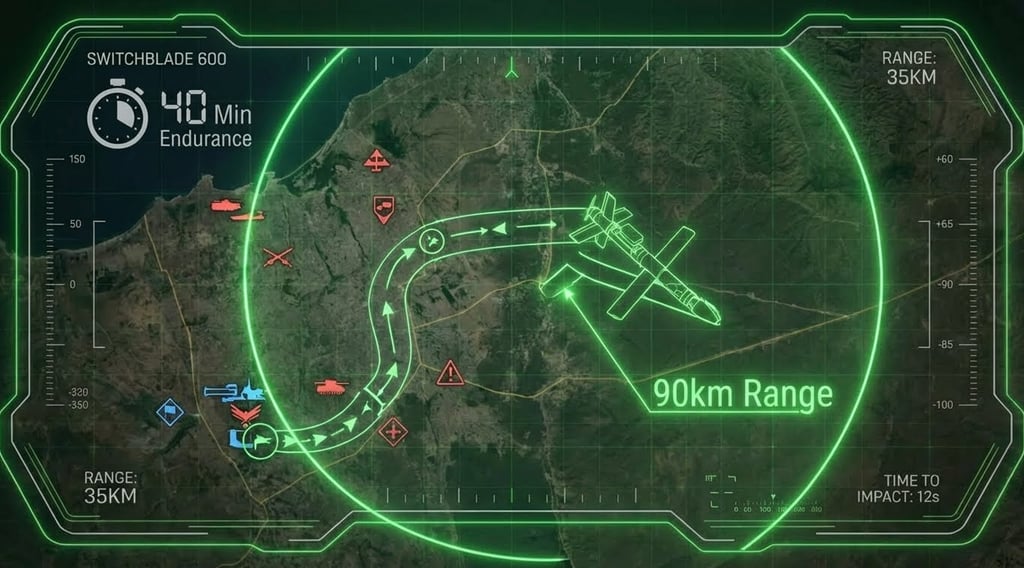
FeatureSpecificationTotal Weight65 lbs (29.5 kg) AUR; 33 lbs (15 kg) MunitionOperational Range40+ km (standard); 90+ km (with Forward Pass/DDL)Loiter Endurance40+ MinutesSprint Speed115 mph (185 km/h)WarheadHigh-Explosive Anti-Tank (HEAT) – Javelin DerivedGuidanceDual EO/IR Gimbal; Autonomous Homing; Tap-to-TargetEncryptionAES-256 Bit Encrypted Digital Data Link (DDL)
II. Tactical Employment & Doctrine
Modern doctrine classifies the SB600 not merely as a drone, but as a launched effect. Key tactical applications include:
SEAD (Suppression of Enemy Air Defenses): Using low RCS (Radar Cross Section) to infiltrate and neutralize Surface-to-Air Missile (SAM) radars.
RSTA Integration: Serving as a "scout-sniper" in the sky, identifying high-value targets and executing strikes without human-in-the-loop latency.
Mothership Concepts: Integration with MQ-9A Reaper platforms for high-altitude deployment, extending the SB600 range to over 175 km.
III. Case Studies: Battlefield Analysis (2024-2025)
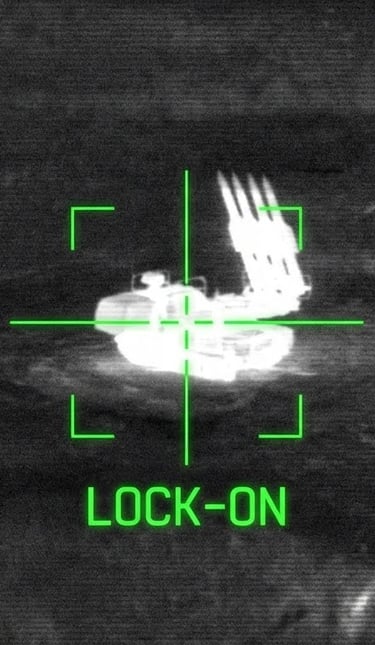
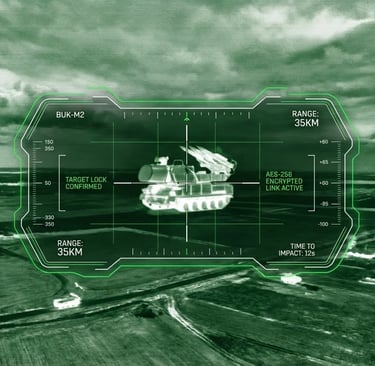
Case 1: The "Buk-M2" Interdiction (March 2025)
Location: Donetsk Sector
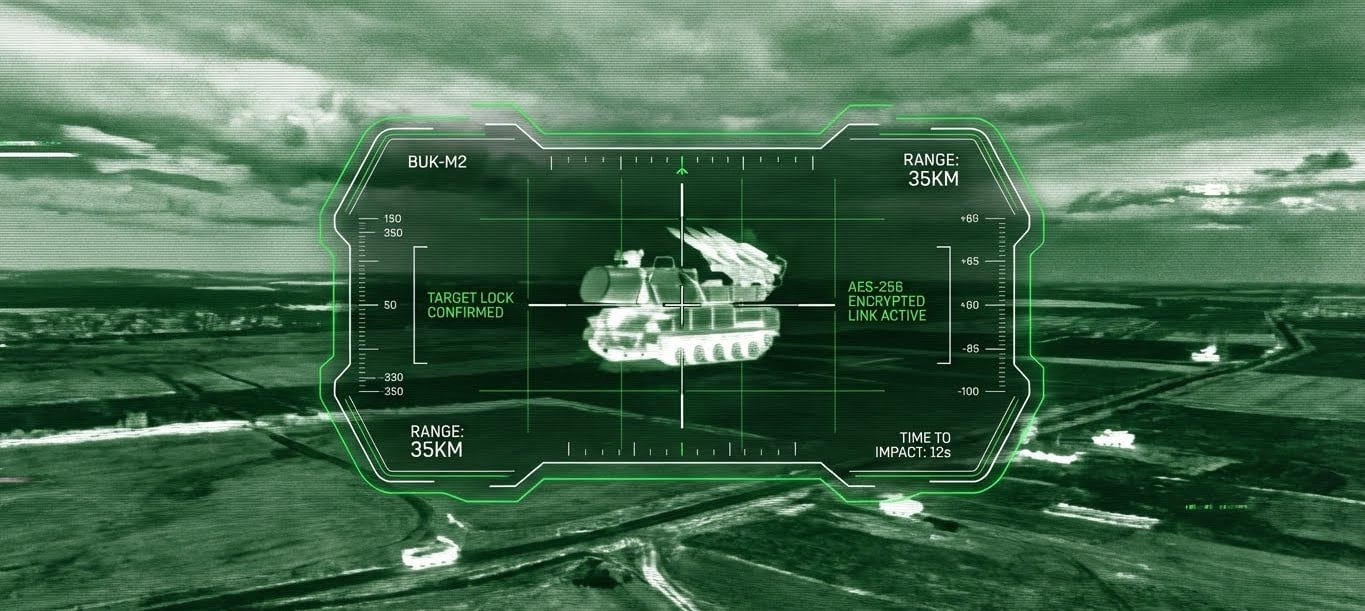
Scenario: Ukrainian operators identified a Russian Buk-M2 SAM system positioned 35 km behind the FLOT (Forward Line of Own Troops).
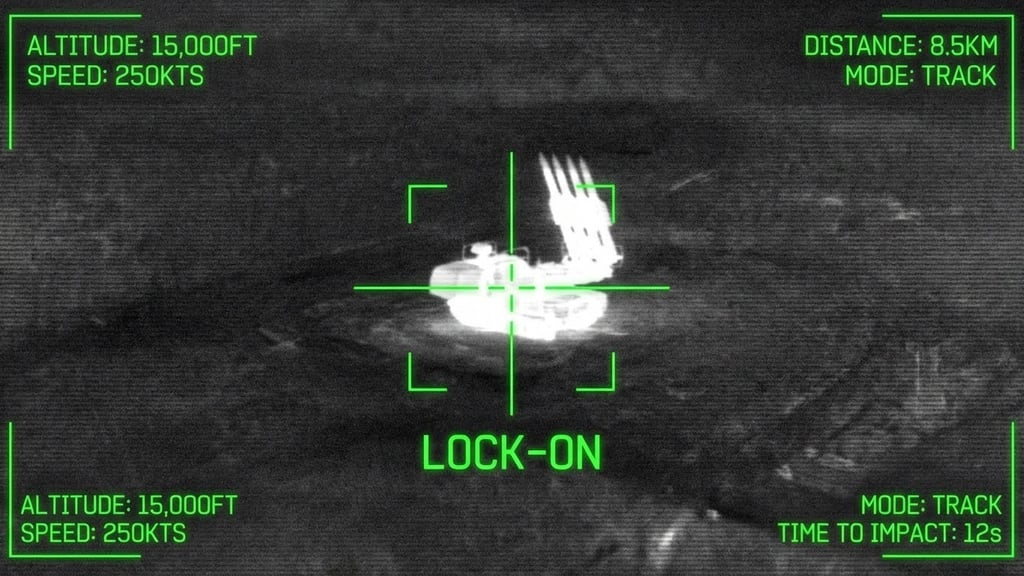
Outcome: The SB600 utilized its automatic homing system to lock onto the radar signature. Despite heavy EW jamming in the area, the SB600's anti-jam GPS enabled a direct top-down strike, resulting in total catastrophic destruction of the radar vehicle...requires the precision and rapid reaction capabilities honed in urban environments, similar to those outlined in our urban extraction analysis of Operation Southern Spear.
Case 2: Moving Target Engagement (November 2024)
Location: Southern Front
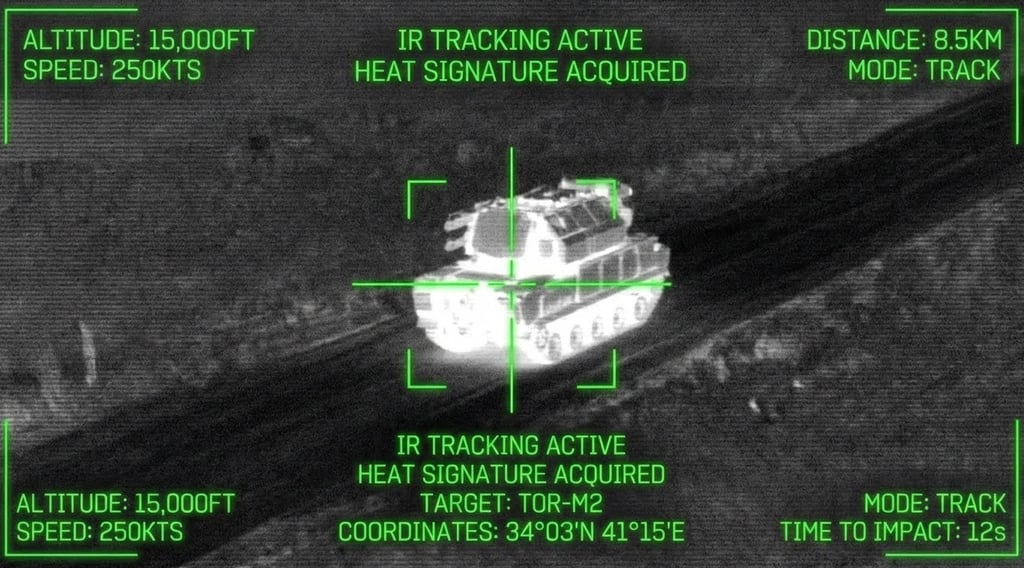
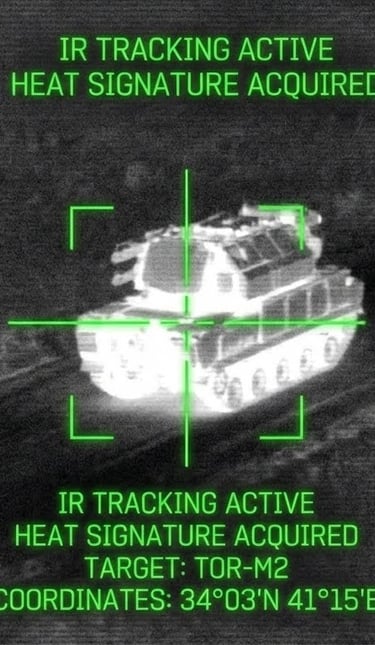
Scenario: A Russian Tor-M2 system was attempting to relocate under the cover of night.
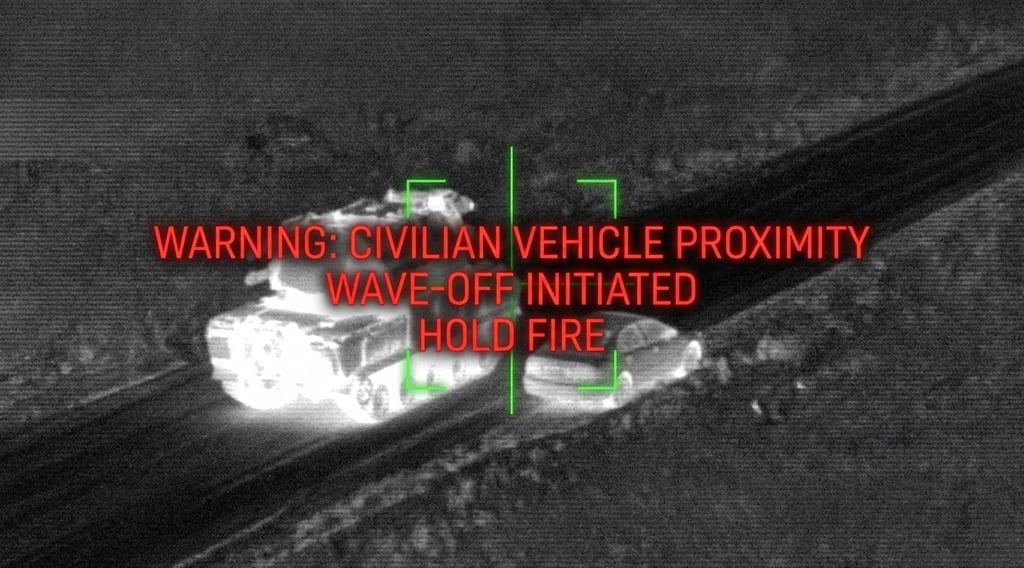
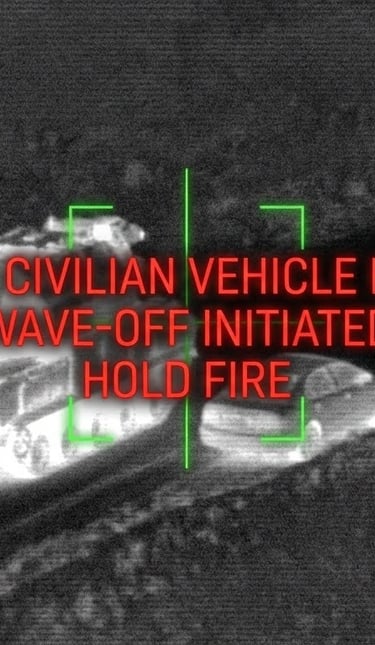
Outcome: The SB600’s high-resolution IR gimbal tracked the heat signature of the Tor’s engine. The operator executed a "wave-off" when a civilian vehicle neared, then recommitted for a strike once the target was isolated.
Case 3: Project LASSO Evaluation (September 2025)
Location: Fort Hood, USA
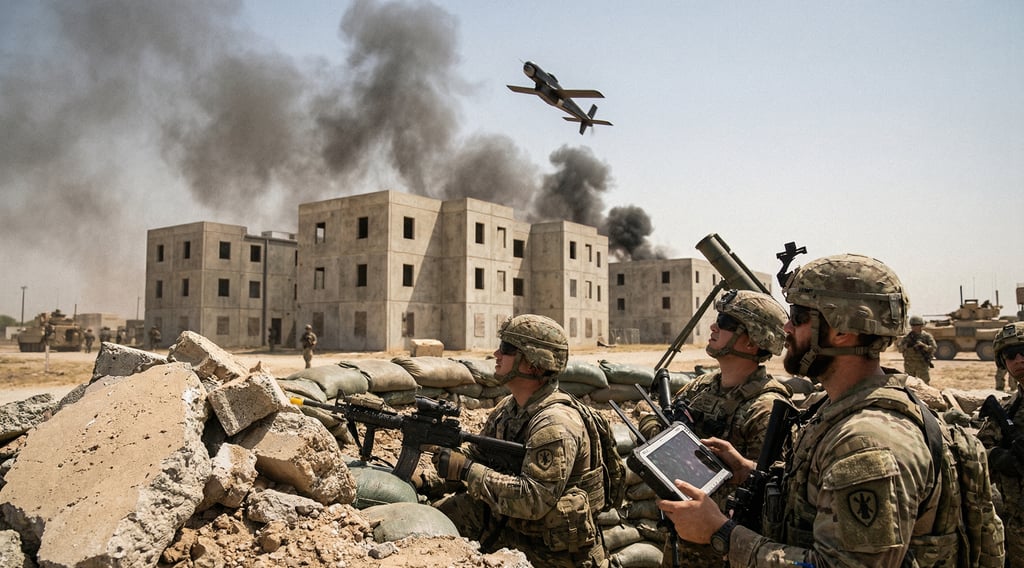
Scenario: US Army 1st Cavalry Division tested the SB600 in a simulated high-intensity urban environment.
Outcome: The test proved that a single infantry squad could neutralize a tank platoon without line-of-sight, validating the LASSO program's goal of organic precision fires at the brigade level.
Case 4: Air-Launch Mothership Test (July 2025)
Location: Yuma Proving Grounds
Scenario: An MQ-9A Reaper launched two SB600s at 30,000 feet.
Outcome: The munition achieved a record glide-to-strike distance, demonstrating that loitering munitions can be used to "strip" enemy air defenses before larger assets enter the AO.
Case 5: Counter-Battery Suppression
Location: Undisclosed
Scenario: An enemy BM-21 Grad battery was firing from a concealed forest line.
Outcome: The SB600 loitered for 25 minutes until the battery began reloading—its most vulnerable state—before striking the command vehicle.
Case 6: Maritime Interdiction
Location: Black Sea Testing
Scenario: Targeting high-speed maneuverable surface craft.
Outcome: The SB600 demonstrated the ability to track and hit moving maritime targets, proving its utility in littoral combat scenarios.
IV. Avoiding the Strike: Countermeasures (C-UAS)
As loitering munitions become more prevalent, surviving an SB600 attack requires a multi-layered "Survivability Onion" approach...creating a layered defense network. This mirrors the multi-domain naval kill chain strategy we detailed for maritime dominance in the Caribbean.
1. Electronic Warfare (Soft-Kill)
GPS Spoofing/Jamming: While SB600 Block 2 has improved anti-jamming, high-powered directional jammers can still disrupt the DDL (Digital Data Link) if the operator is "in the loop."
Acoustic Detection: Deploying microphone arrays to detect the unique high-pitched whine of the electric motor at low altitudes.
2. Physical & Passive Defense
Multispectral Smoke: Using grenades that block both visual and IR spectrums. If the SB600's sensor cannot "see" the target during the terminal dive, the hit probability drops significantly.
Signature Management: Mobile camouflage nets (like Saab’s Barracuda) to reduce thermal and radar signatures.
3. Kinetic Interception (Hard-Kill)
APS (Active Protection Systems): Systems like Trophy or StrikeShield are being tuned to detect low-speed, high-angle-of-attack threats.
30mm Airburst: Integrating 30mm autocannons with XM1211 HE-P proximity-fused rounds to create a "wall of lead" in the drone's flight path.
V. Future Outlook: Replicator & AI
The US Department of Defense Replicator Initiative aims to field thousands of these systems to overwhelm peer adversaries. Future iterations of the Switchblade will likely feature AI-driven target recognition that requires zero operator input, making EW jamming of the data link largely irrelevant during the terminal phase of the attack.
will be integral to the combined arms framework projected in our overarching Aegis Warfare 2026 strategic field report.